For parents and leaders
Introduction
This guide gives parents and leaders nine simple, loving conversations to help youth learn how to apply the Atonement of Jesus Christ to overcome repeating sins, such as pornography, and the other afflictions of this generation.
You are the one sitting across from a young man or young woman who keeps coming back to the same sin. These conversations keep the focus where it belongs: on the Savior and His power to heal them, not on the habit.
Together, the conversations teach six principles:
- Your divine heritage and destiny define your identity.
- Focus on the Savior, not the behavior.
- A broken heart and a contrite spirit.
- Repentance is a process, not an event.
- Fill your life with light.
- Weak things can become strong through Christ.
Each conversation can be a short visit of 15 or 20 minutes, spread over weeks or months, or a talk at the kitchen table. They are listed in roughly the order you will need them, but you will come back to some of them again and again.
Each one gives you:
- A follow-up on the last assignment
- What to teach
- Scriptures to open together
- A story to tell
- The apostles’ own words
- What to say and do
- An assignment to close with
We give an assignment because, as President Russell M. Nelson taught, “the Lord loves effort, because effort brings rewards that can’t come without it.”41 When we follow up, we praise the effort, not just the result. If an assignment didn’t get done, we don’t lecture; we ask what got in the way and invite them to try again.
These discussions are based on the teachings of modern prophets and apostles and on the scriptures. Their foundation is a review of every general conference talk given from October 2011 through October 2026, about 1,145 in all, including roughly 615 talks by 22 members of the First Presidency and the Quorum of the Twelve Apostles, each read in full. They also draw on the General Handbook (chapter 32), For the Strength of Youth: A Guide for Making Choices, Ensign and Liahona articles, the Church’s Addressing Pornography resources, and the scriptures. The apostles’ quotations were checked against the full text of their talks.
The nine at a glance
- 1Teach them their true identity. A son or daughter of God; a habit is never their name.
- 2Teach them not to hide from the Father, but to run to Him. Godly sorrow looks up; shame and pride look inward.
- 3Help them focus on the Savior. Remember Him, not the sin; don’t become a sin accountant.
- 4Teach them what a repentant heart is. A broken heart and contrite spirit is the offering, not a sinless week.
- 5Teach them to make a plan. Urges are waves, not a slide; make the plan once, then put it down.
- 6Teach them to fill their life with light. Replace the habit with daily personal worship.
- 7Prepare them for the stumble. Repenting today does not undo yesterday’s repentance.
- 8Surround them with help. Secrecy keeps a habit alive; light weakens it.
- 9Point them to the promise. He changes the heart; no one is beyond His reach.
Before you begin: receive them with love, not alarm
What to teach
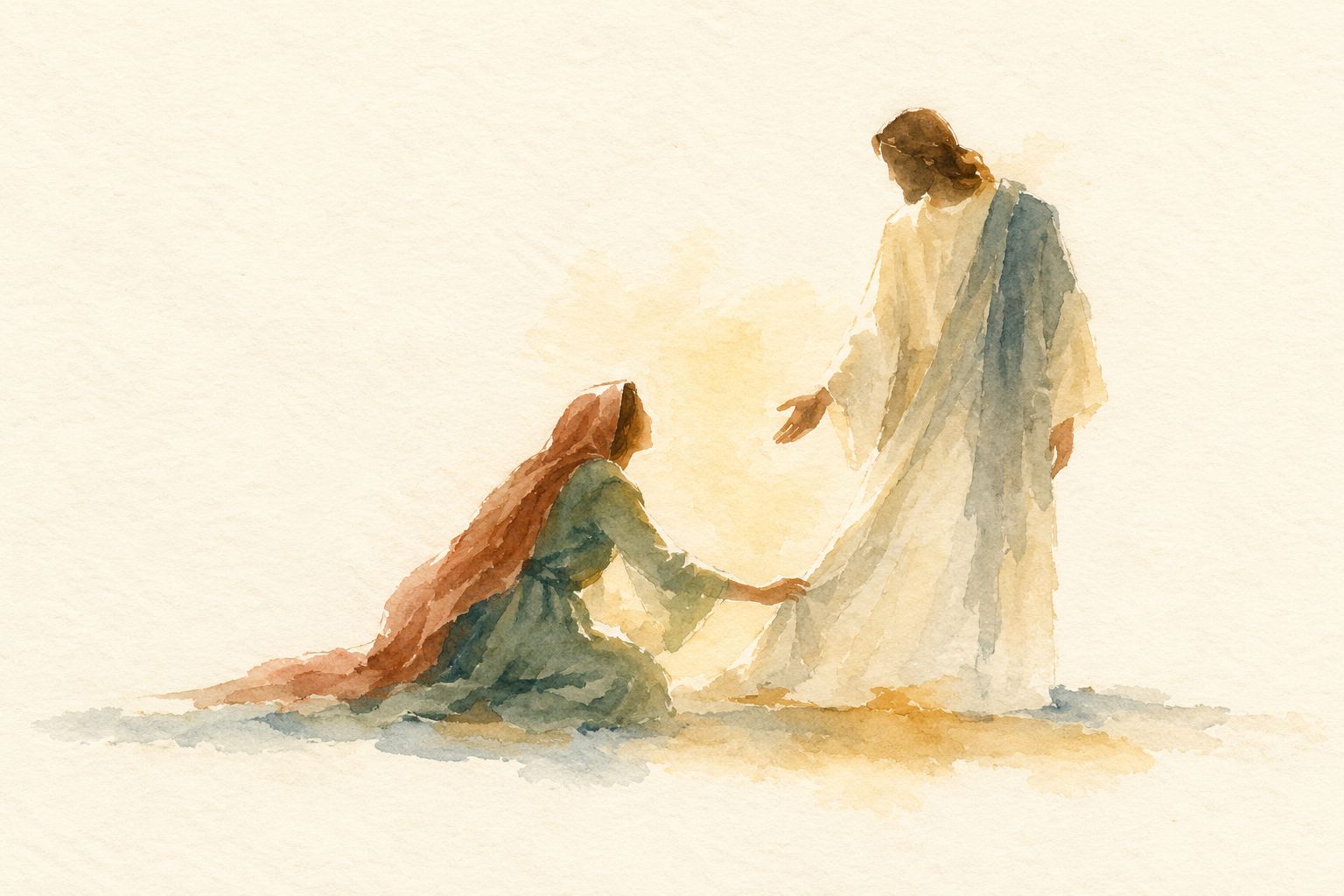
Here you teach by example more than by words. The Savior drew sinners close without excusing the sin. He did not condemn, and He did call them to change. The General Handbook makes the woman taken in adultery your pattern (32.3)1. How you react in the first minute decides whether they come back to you next time or hide.
The Church’s own guidance for parents says the same: “If you discover that your child has been involved with pornography, it’s essential to respond with love.” It quotes Sister Joy D. Jones: “love must be both at the forefront and the foundation of all our efforts” (Help for Parents, “Overview for Parents”).
Avoid metaphors that suggest lost worth, like chewed gum or a passed-around cupcake. The Church warns that these “often promote fear of sexuality or feelings of low or irreparable self-worth” (Help for Parents, “How do I talk to my child about healthy sexuality?”). The metaphors in this guide describe a process, not a person’s value.
The habit is not the agenda; the Savior is. In every conversation that follows, keep the Savior at the center, not the sin. When every visit opens with “How have you been doing with it?”, the habit becomes the center of the relationship and the first thing they think of when they see us. That is the opposite of what we want.
Address the habit briefly when you need to, then set it down and spend the time on Him: who they are, what they are learning, where they have felt the Spirit, and whom they are serving. Let them bring it up when they need to. They will, if they know we are safe.
Scriptures for you
- John 8:10–11 “Neither do I condemn thee: go, and sin no more”
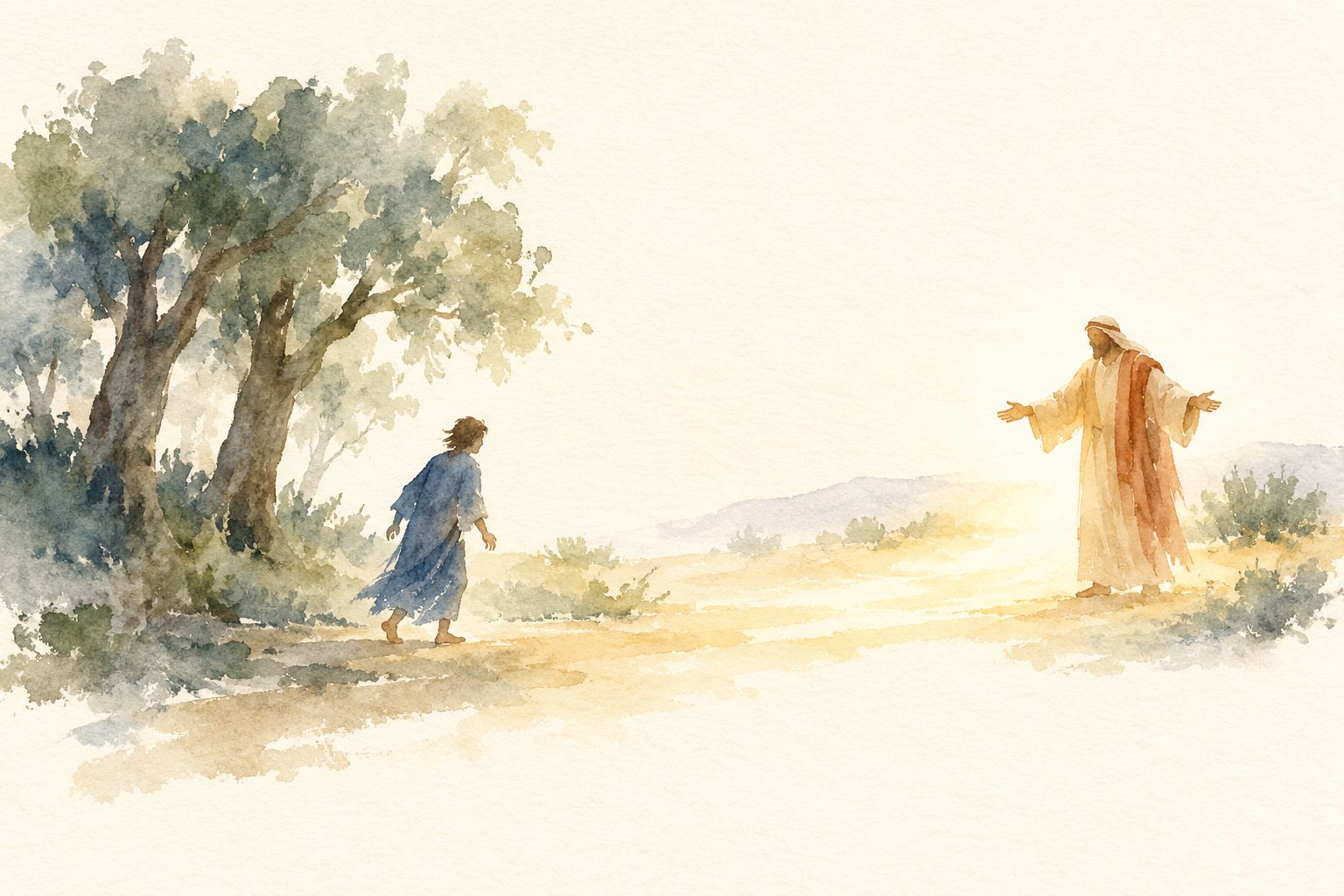
- Luke 15:20 “when he was yet a great way off, his father saw him, and had compassion, and ran”
- 3 Nephi 18:32
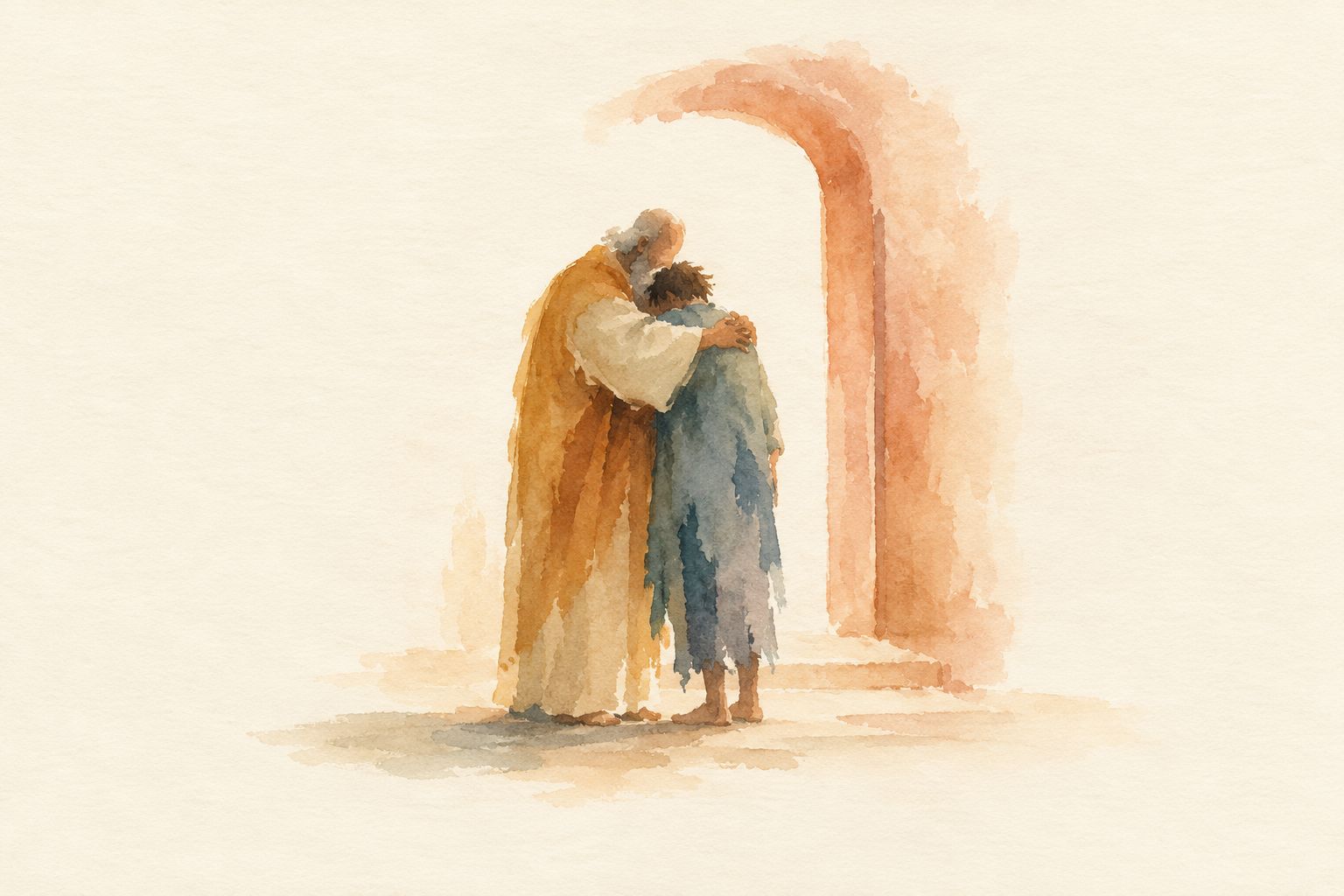
A story to rememberThe prodigal’s fatherLuke 15:11–32
The father did not wait at the door with a list of conditions. He saw his son far off and ran to him, and he called for the robe and the ring before his son finished his rehearsed confession. Remember this story, and then be that father.
In the apostles’ words

“Most people who are struggling know that they are struggling.” Don’t scold, and don’t ask unhelpful questions.
Dale G. Renlund, “The Powerful, Virtuous Cycle of the Doctrine of Christ,” Apr 20242 
A bishop could help a young man repent only after he helped the parents “react with love and understanding.”
Quentin L. Cook, “Adjustments to Strengthen Youth,” Oct 20193 
“As a brother with pornography concerns waits outside his stake president’s office, the stake president prays to know how to help. A clear impression comes: ‘Open the door and let the brother in.’ … The priesthood leader opens the door and embraces the brother.”
Gerrit W. Gong, “Trust Again,” Oct 20214 
“Please do not condemn them. They are not evil or without hope.”
Oaks, Ensign, Oct 20155
What you can do
- Thank them for telling you.
- Stay calm.
- Ask only enough to understand their attitude and the nature, frequency, and duration of the behavior, and nothing from curiosity (Handbook 32.8.1)1.
Parents, your first reaction is the one they will remember.